AI-Driven Debt Managers: Balancing efficiency with Data Privacy Risks
This guide helps you decide between automated AI debt managers and manual tracking methods. It is NOT for those already in legal collections or bankruptcy proceedings, where human negotiation is legally and financially superior to any algorithm. We will compare the privacy risks of apps like Bright Money against the control of manual tools like Undebt.it.
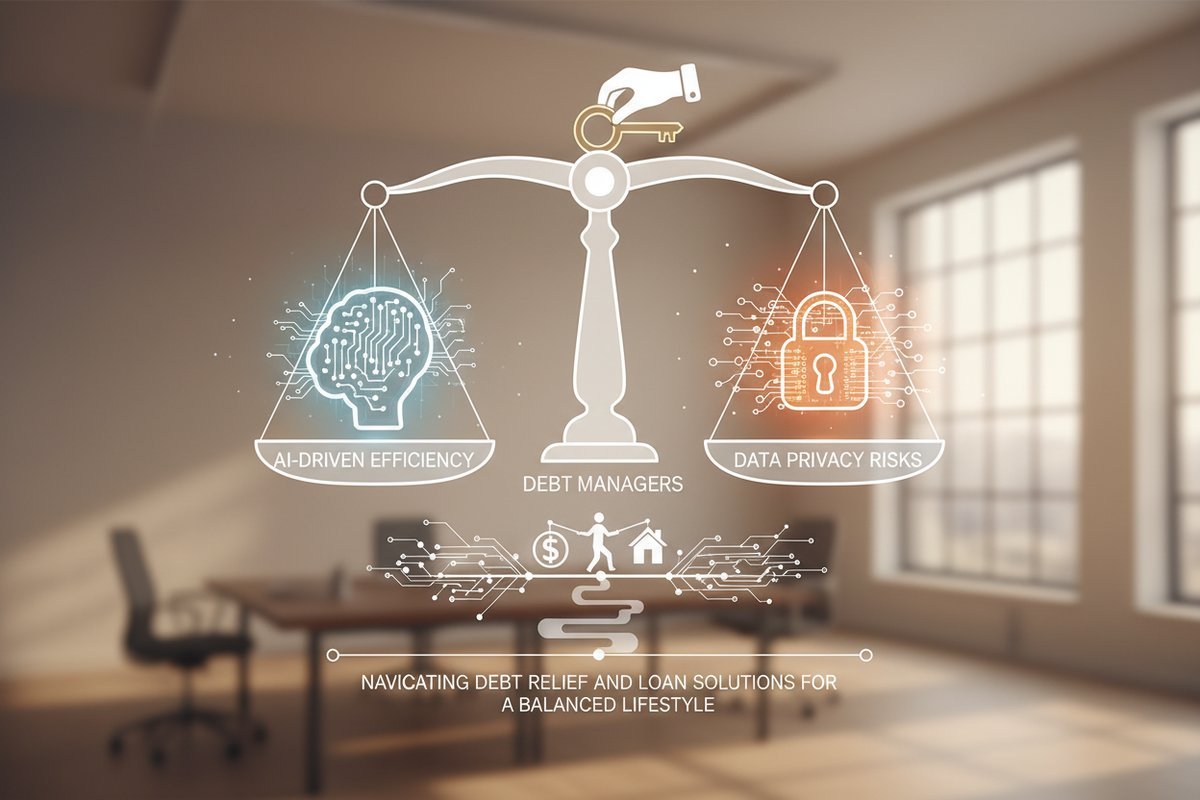
The Core Decision: Automation vs. Anonymity
The choice effectively boils down to one question: Are you willing to share your granular spending data-what you buy, when you buy it, and where you are located-in exchange for an algorithm that automates your willpower?
AI-driven tools work by connecting directly to your bank feed via aggregators. They analyze your cash flow to find “safe” amounts to withdraw and apply to your credit card debt. The benefit is speed and psychological relief. The downside is that you are often the product. A 2025 analysis by Cybernews found that a significant majority of finance apps share data with ad networks to build behavioral profiles.
Option A: The AI Auto-Pilot (e.g., Bright Money)
Best for: Users with stable income who suffer from “decision paralysis” and want a hands-off approach.
Apps like Bright Money use artificial intelligence to study your checking account. They identify small pockets of unused cash and automatically move them to pay off high-interest debt. The AI adapts to your spending patterns, pausing withdrawals if your balance gets too low.
The Privacy Trade-off: To function, these apps require deep permissions. They don’t just see your balance; they see that you spent $14 at a coffee shop at 8:02 AM. While legitimate apps use bank-level encryption (often 256-bit AES) to stop hackers, their business models often involve sharing anonymized insights with third parties. You are trading data sovereignty for results.
Option B: The Manual Strategist (e.g., Undebt.it)
Best for: Privacy-conscious users or those with irregular income who need total control over every dollar.
Tools like Undebt.it offer a digital version of the snowball or avalanche method without requiring your bank login credentials. You manually enter your balances and interest rates. The software calculates your payoff date and tells you what to pay next, but it never touches your actual money.
The Privacy Trade-off: The trade-off here is time and effort. You must log in, update balances, and physically make the payments yourself. However, your risk of a data breach is significantly lower because the platform doesn’t hold the “keys” to your bank account or your transaction history.
Common Mistakes to Avoid
When choosing a debt management tool, most users look at the interest savings but ignore the legal and privacy fine print. Here are the errors that cost you control.
- Confusing “Security” with “Privacy”: A site can have “bank-level security” (hackers can’t get in) while having a terrible privacy policy (they legally sell your data out the back door). Do not assume a secure padlock icon means your data stays private.
- Granting Excessive Permissions: Financial apps often request access to your camera, contacts, or precise location. As noted in recent cybersecurity reports, this data is rarely needed for debt calculation and is often used for ad targeting. Deny these permissions if the app still functions without them.
- Ignoring the “Revoke” Button: Many users delete an app from their phone but forget to revoke the bank connection token. The service can sometimes continue to access your transaction data for months after you stop using it.
When This Doesn’t Work
AI tools are not magic wands for severe financial distress. If you are already missing payments, an AI manager cannot help you.
Recent research from the Yale School of Management (2025) highlights that human interaction is superior for recovery rates in delinquent accounts. AI struggles with empathy and complex negotiation. If you are negotiating a settlement or facing a lawsuit, you need a human credit counselor, not an app. Additionally, if your income varies wildly (e.g., freelance work), automated withdrawal algorithms can sometimes trigger overdrafts despite their “safe-to-save” promises.
Your Checklist: Vetting the App
Before you connect your bank account to any AI debt tool, run through this 5-minute audit.
☐ Check the Business Model: Is the app free? If so, they are likely monetizing your data. Paid subscriptions (like YNAB or Monarch) often have better privacy incentives.
☐ Search for “Data Sharing” in Terms: Use CTRL+F in the privacy policy. Look for phrases like “share with partners for marketing purposes.” If you see this, decide if the convenience is worth the targeting.
☐ Verify the Aggregator: Does the app use a known connector like Plaid or MX? These add a layer of security between your bank credentials and the app itself.
☐ Test the “Opt-Out”: Can you easily opt out of data sharing? California residents (CCPA) and Europeans (GDPR) have specific rights here, but ethical apps offer this to everyone.
☐ Review Recent News: A quick search for “[App Name] data breach” can save you a headache. Check sites like Cybernews for the latest app privacy audits.
The Trade-offs
There is no perfect solution. You must choose which sacrifice fits your lifestyle.
If you choose AI Automation: You sacrifice data privacy and granular control. You gain approximately 5-10 hours a month of mental freedom and potentially save money by avoiding late fees automatically. You accept that your financial behavior is likely being profiled.
If you choose Manual Control: You sacrifice time and mental energy. You must be disciplined enough to log in every week. You gain the security of knowing your banking credentials are not stored on a third-party server and your spending habits remain private.
Ultimately, if your debt causes you extreme anxiety that leads to inaction, the privacy cost of an AI tool like Bright Money may be worth the benefit of actually getting the debt paid. But if you are disciplined and privacy-focused, a manual calculator like Undebt.it remains the gold standard for secure debt elimination.