Debt Consolidation vs. Settlement: Which 2026 Strategy Saves More?
This decision isn’t just about interest rates; it is about choosing between preserving your credit score or liquidating your financial reputation for cash savings. This guide is NOT for those with under $7,500 in debt, as the fees often outweigh the benefits. It is also not for anyone planning to buy a home in the next 24 months, where a settlement mark could trigger an automatic mortgage rejection.
The Core Decision: Credit vs. Cash
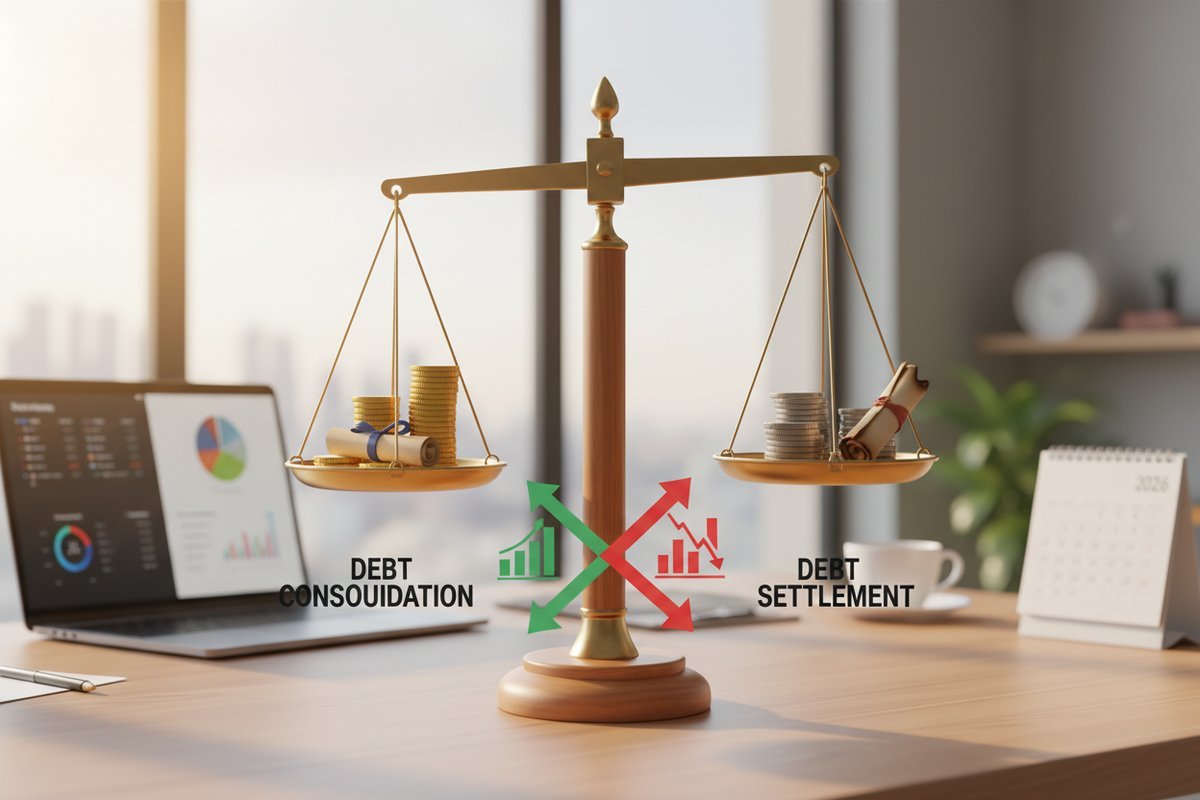
The choice between consolidation and settlement in 2026 comes down to a simple trade-off: Are you trying to save your credit score (Consolidation) or your cash flow (Settlement)?
Debt Consolidation is a strategic refinance. You take out a new loan-typically from lenders like SoFi or LightStream-to pay off multiple high-interest creditors at once. You still owe the full principal, but you secure a lower interest rate (often 7-10% vs. the 25%+ of credit cards). This path improves your credit score over time by lowering utilization.
Debt Settlement is a strategic default. You stop paying your bills. Companies like National Debt Relief or Freedom Debt Relief then negotiate with your angry creditors to accept a lump sum (often 50-80% of what you owe) to close the account. This path destroys your credit score for up to seven years but drastically reduces the total amount you pay.
Common Mistakes to Avoid
In 2026, the landscape of debt relief has shifted, and errors here are more costly than before. Avoid these specific traps:
- Ignoring the “Tax Bomb” (Form 1099-C): This is the most common surprise. If a creditor forgives $600 or more, the IRS counts that “saved” money as taxable income. If you settle $20,000 of debt for $10,000, you may owe taxes on the $10,000 “profit.”
- Paying Upfront Fees for Settlement: It is illegal for settlement companies to charge you before they settle a debt. Legitimate providers like Freedom Debt Relief (search for “Program Guarantee”) only charge their 15-25% fee after a successful negotiation.
- Confusing Student Loan Rules: As of January 2026, the tax exemption for forgiven student loans has expired (unless extended). Do not assume the tax-free forgiveness rules of 2021-2025 still apply to your private settlement deals.
The Trade-offs
Every financial product extracts a price. Here is what you realistically sacrifice with each option:
- With Consolidation: You sacrifice cash flow flexibility. You must qualify for the loan (often requiring a 650+ credit score) and commit to a rigid monthly payment. If you miss a payment to a lender like Upgrade, you risk default just like with a credit card.
- With Settlement: You sacrifice access to credit. Your credit report will carry a “Settled for less than full amount” flag for seven years. This makes renting an apartment, buying a car, or even getting certain jobs significantly harder.
- With Both: You sacrifice financial privacy. You will be sharing detailed financial data with third parties, and in the case of settlement, you may face aggressive collection calls during the negotiation phase.
Your Checklist: The Insolvency Test
Before choosing settlement to avoid bankruptcy, you must determine if you can dodge the tax bill using IRS Form 982.
☐ Calculate Total Liabilities: Add up every debt you owe (mortgage, cards, loans) immediately before the settlement.
☐ Calculate Total Assets: Add up the value of everything you own (home equity, car, savings, 401k).
☐ Compare: If your Liabilities > Assets, you are “insolvent.”
☐ Check Forms: Search for “Form 982” on the IRS website. If you are insolvent, you may not have to pay tax on the forgiven debt. This is a critical step that saves many people thousands of dollars.
Decision Guide: Which Path for You?
Choose Debt Consolidation If:
- Your credit score is still “Good” (670+) or “Fair” (580+ for lenders like Upgrade).
- Your debt-to-income ratio is under 40%.
- You have not missed payments yet but are suffocating under interest.
- Action: Check rates with SoFi (look for “Personal Loans”) to see if you can cut your interest rate by half.
Choose Debt Settlement If:
- You are already behind on payments or facing collections.
- Your credit score has already tanked below 600.
- You are mathematically unable to pay off the principal within 5 years.
- Action: Request a savings estimate from National Debt Relief (look for “Am I Eligible?”) to see how much principal they can shave off.