Gig Workers: Personal Loans or Income-Based Hardship Plans?
This guide helps you choose between refinancing high-interest debt into a personal loan or negotiating an income-based hardship plan with current creditors. This is NOT for borrowers with federal student loans (who should use the new 2026 Repayment Assistance Plan) or those with less than $5,000 in debt, where origination fees often outweigh the savings. We will focus specifically on private debt solutions for variable-income earners.

The Real Question: Optimization vs. Survival
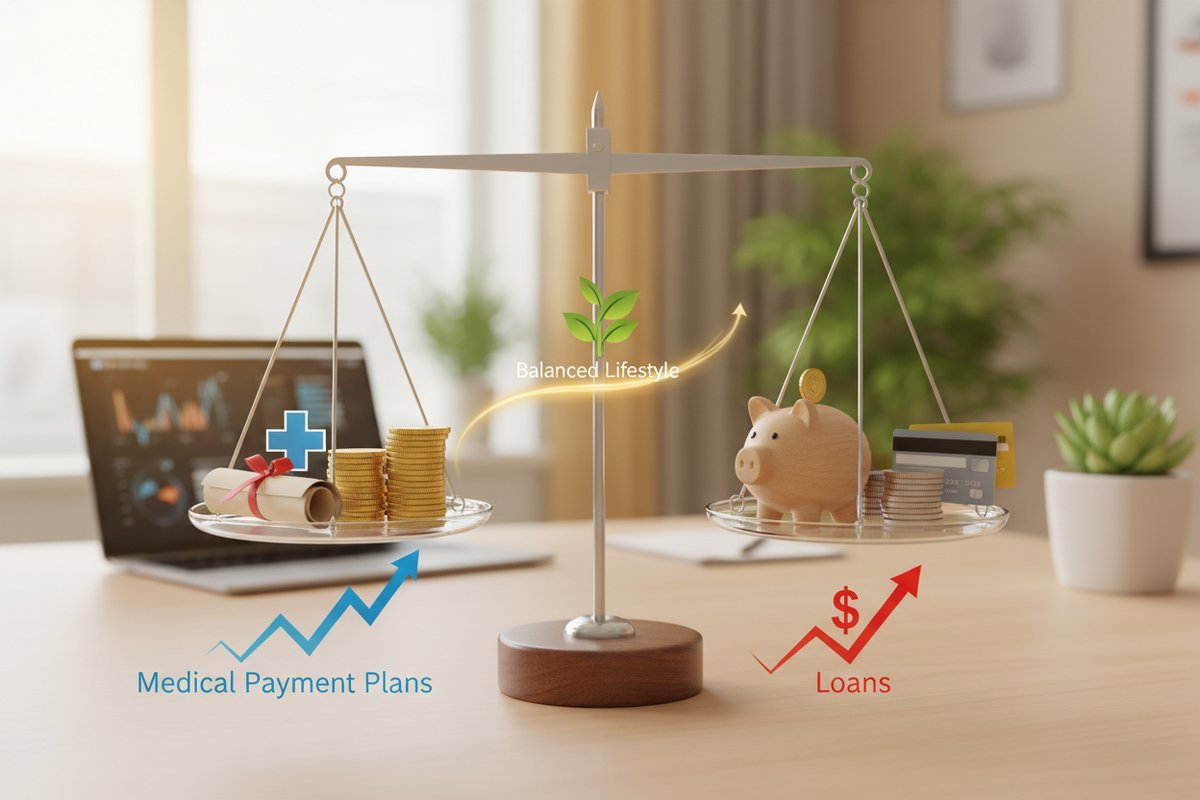
As a gig worker, your debt strategy depends entirely on your current cash flow stability, not just your credit score. You are choosing between two distinct paths:
- Optimization (Personal Loan): You have a steady average income, but high-interest credit cards (21%+) are eating your profits. You want to cut rates and simplify bills.
- Survival (Hardship Plan): Your income has structurally dropped, and you are using credit cards to pay credit cards. You need to pause or lower payments immediately to avoid default.
Option 1: Personal Loans (The “Optimization” Route)
A personal loan pays off your existing debt immediately, leaving you with a single, fixed monthly payment. In 2026, the average personal loan rate is around 12.16%, significantly lower than the 20-30% APR often found on credit cards.
Best For
Gig workers with a credit score of 660+, at least two years of tax returns showing profit, and who are currently current on their bills. This is a strategic move to save money, not a rescue raft.
The “Gig Worker” Nuance
Standard lenders often reject freelancers due to “irregular income.” However, newer AI-driven lenders like Upstart look at education and earning potential rather than just FICO scores, which favors newer freelancers.
Warning: Be careful with “Unemployment Protection” features. For example, SoFi offers excellent unemployment protection that pauses payments if you lose your job. However, this typically applies to W-2 employees who are fired. It generally does not cover a freelancer who simply has a slow month or loses a major client. Read the terms specifically for “self-employment termination” clauses.
Option 2: Income-Based Hardship Plans (The “Survival” Route)
If you cannot qualify for a new loan because your debt-to-income ratio is too high, you stop looking for new money and start negotiating with old money. A “Hardship Plan” (or Customer Assistance Program) is an internal agreement with your credit card issuer (like Chase or Bank of America) to temporarily lower your interest rate (often to 0-9%) and minimum payment for 6-12 months.
Best For
Gig workers facing a significant, documented drop in income who are at risk of falling behind. If you are choosing between buying groceries and paying your minimums, this is your path.
How It Works for Freelancers
Since you don’t have a “termination letter,” you must prove hardship differently. You will need to show bank statements from your “good” months versus your current “bad” months to prove the income drop is real and involuntary.
Common Mistakes to Avoid
Gig workers often trap themselves by mistiming these decisions. Avoid these three specific errors:
- Applying for loans after missing a payment: Once you miss a payment, your credit score drops, and personal loan lenders like LendingClub or Best Egg will likely reject you or offer predatory rates. You must apply for the loan while you still look good on paper.
- Confusing “Revenue-Based” with “Income-Based”: Fintechs like Giggle Finance offer “revenue-based” financing where payments adjust to your sales. This sounds great, but these are often commercial products with much higher effective APRs than personal loans. Do not use them to pay off personal credit card debt unless you are a registered business with high cash flow.
- Waiting for the bank to call you: Hardship departments do not cold call to offer help; collections departments do. You must call customer service and specifically ask for the “Hardship Department” or “Customer Assistance Program.”
The Trade-offs
Every financial decision has a price. Here is what you sacrifice with each option:
If you choose a Personal Loan:
- You sacrifice flexibility: You replace a flexible minimum payment (which drops if you spend less) with a fixed installment payment. If your gig income crashes next month, you still owe that fixed amount.
- You risk origination fees: Lenders like Avant or Upstart may charge 0% to 8% upfront. On a $10,000 loan, an 8% fee means you only get $9,200 but owe $10,000.
If you choose a Hardship Plan:
- You sacrifice access to credit: In exchange for a lower rate, the bank will usually freeze or close your credit card. You cannot use it for gig expenses (like gas or software subscriptions) while on the plan.
- You risk a “comment” on your credit report: While not a default, the account may be marked as “paying under a partial payment agreement,” which can spook future lenders until the plan is finished.
Your Checklist: Applying for Hardship as a Gig Worker
If you decide the Hardship Plan is your best route, use this checklist to prepare before you call. Bank representatives are trained to say “no” to vague requests but “yes” to specific data.
☐ 1. Calculate your “Hardship Gap”
Don’t just say “I’m broke.” Say: “My income dropped from $4,000/month to $2,200/month, creating a $600 deficit.” Specific numbers build credibility.
☐ 2. Prepare the “Income Volatility” Proof
Gather 3 months of bank statements from your “peak” earning period and the last 3 months of “low” earnings. Highlight the difference.
☐ 3. Draft a Hardship Letter
Write a simple PDF document following this structure:
– Cause: “Loss of major client” or “Platform algorithm change reduced offers.”
– Duration: “I expect this to last 3-6 months while I pivot to [new platform/client].”
– Request: “I am requesting a temporary APR reduction to 5% and a fixed payment of $X.”
– Recovery Plan: “I have already signed up for [App X] and [App Y] to replace lost income.”
☐ 4. Call the Right Number
Call the number on the back of your card. Immediately ask for “Customer Assistance” or “Hardship.” Front-line support usually cannot authorize these plans.
☐ 5. Verify the “Revert” Terms
Ask specifically: “What happens at the end of 6 months? Does the interest rate snap back to 29% retroactively?” (Avoid plans that do this).
Who This Is NOT For
Before you act, ensure you don’t fall into these exclusion categories:
- Federal Student Loan Borrowers: Do not use private personal loans to refinance federal student loans. You will lose access to the new “Repayment Assistance Plan” (RAP) and forgiveness options launching in July 2026. Stick to federal programs like SAVE or IBR.
- Gig Workers with High Expenses: If you rely on your credit card to buy inventory or pay for gas to do your job, a Hardship Plan (which freezes the card) will put you out of business. You must secure a separate debit card or cash reserve for business expenses first.
Conclusion
The choice comes down to your trajectory. Choose a Personal Loan if your income is stable enough to support a fixed monthly payment and you want to attack the principal balance aggressively. Look at Upgrade or SoFi, but ensure you have 2 years of tax returns ready.
Choose a Hardship Plan if you are bleeding cash. Swallow the pride, call your creditor, and accept the account closure to save your credit score from a default. Your goal is to live to fight another day.