HELOC vs. Unsecured Loans: Is Your Home Worth Risking?
If you are consolidating credit card debt, risking your home to pay off unsecured bills is a dangerous trade-off that often backfires. This guide compares the real costs, risks, and approval timelines of both options for February 2026, helping you decide if the lower rate is worth the lien.
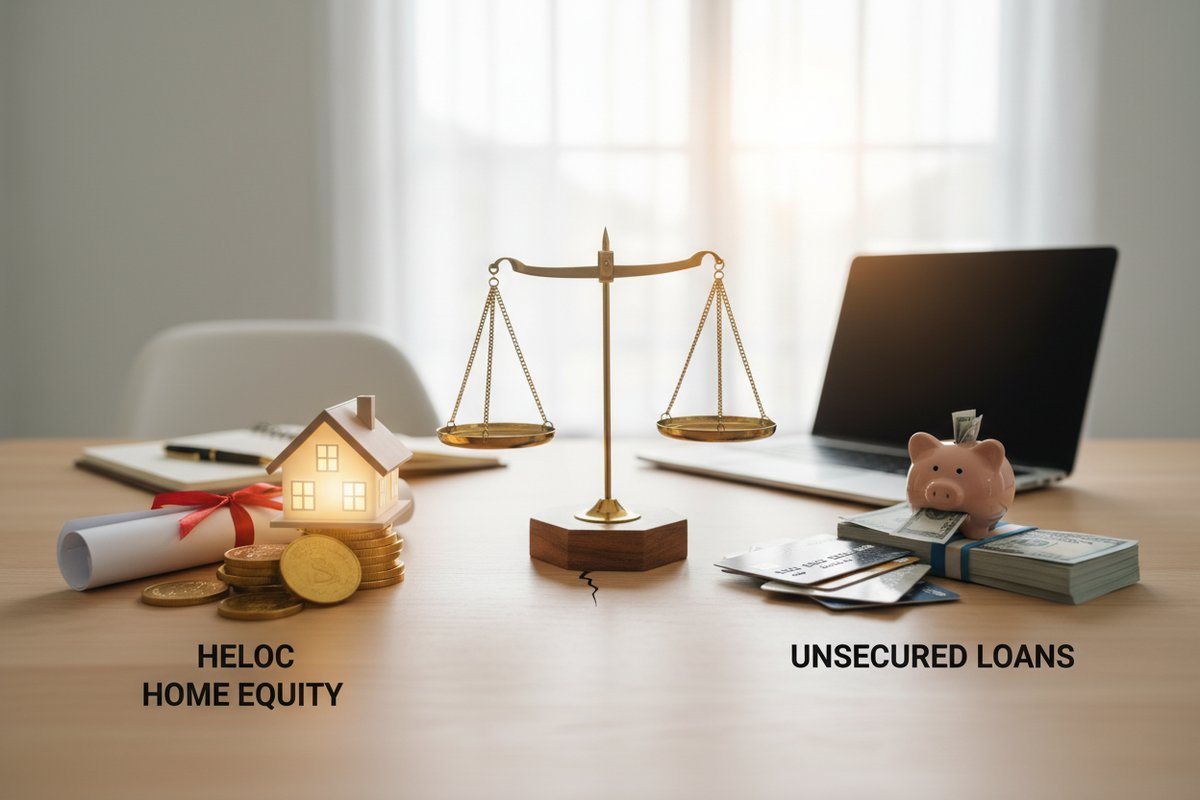
The Core Decision: Speed vs. Risk
In February 2026, the financial landscape presents a clear divide. HELOCs are the cheapest way to borrow large sums, with average rates hovering between 7.23% and 8.5%. However, they are slow to fund and secure the debt against your property. Unsecured personal loans are significantly more expensive, averaging 12.16%, but they protect your assets and fund within days.
Your decision shouldn’t just be about the math. It should be about liquidity and liability. If you lose your job, defaulting on a personal loan ruins your credit score. Defaulting on a HELOC ruins your life by taking your home.
Common Mistakes to Avoid
Most borrowers focus solely on the monthly payment, ignoring the structural risks that come with secured debt. Here are the most dangerous errors homeowners make in 2026.
- Securing Unsecured Debt: Moving $30,000 of credit card debt to a HELOC feels smart because the rate drops from 22% to 8%. But you have effectively converted “unsecured” bad debt into a lien on your house. If you run the cards up again-a statistically common occurrence-you now have double the debt and your home is at risk.
- Ignoring the “Reset Shock”: HELOCs typically start with a 10-year “draw period” where you only pay interest. When this ends, the loan converts to a repayment period, and you must pay principal + interest. This often causes payments to more than double overnight, shocking borrowers who didn’t plan for it.
- Using HELOCs for Depreciating Assets: Never use home equity to buy a car or fund a vacation. You are financing a short-term want with a 30-year liability. By the time you pay it off, the car will be in a scrapyard, but the lien will still be on your deed.
When This Doesn’t Work
A HELOC is a powerful tool, but it is specifically designed for homeowners with stable equity and income. It is not the right solution for everyone.
Do NOT use a HELOC if:
- You plan to sell soon: If you sell your home in 2-3 years, the closing costs (often $500-$1,000+) and hassle of opening a HELOC may outweigh the interest savings.
- Your income is unstable: Variable rates on HELOCs fluctuate with the Prime Rate. If your income is irregular, a rising payment can quickly become unmanageable.
- You need money immediately: While some fintech lenders like Aven or Figure claim fast funding, traditional banks can take 4-6 weeks to appraise your home and close the loan.
The Trade-offs: What You Sacrifice
Every financial product demands a sacrifice. Understanding what you are giving up is key to making the right choice.
Option A: The HELOC (Home Equity Line of Credit)
Best for: Home renovations, massive projects, lowest rates.
- Benefit: Lowest possible interest rates (currently ~7-8%) and potential tax deductions if used for home improvements.
- Trade-off: You sacrifice flexibility and security. Your home is on the line. The rate is variable, meaning it can rise if the Federal Reserve adjusts policy.
Option B: The Unsecured Personal Loan
Best for: Debt consolidation, emergencies, one-time purchases.
- Benefit: Fixed rates and zero collateral. You know exactly what your payment will be for the life of the loan. Funding is incredibly fast-often same-day.
- Trade-off: You sacrifice cost. You will pay a premium for this safety. Rates for excellent credit start around 6.5% at lenders like LightStream, but average borrowers will pay 12%+.
Your Checklist
Before signing any paperwork, run through this final check to ensure you’ve covered your bases.
☐ Check your equity: You generally need to retain 15-20% equity in your home after the loan. If you have less, a personal loan is your only option.
☐ Compare “APR” not just “Rate”: Personal loans often have origination fees (1-8%) that are hidden in the APR. A “low rate” loan with a high fee might cost more than a higher-rate HELOC.
☐ Verify the “Draw Period” terms: If choosing a HELOC, ensure you know exactly when the interest-only period ends and what the max rate cap is.
☐ Get a fixed-rate quote first: Check your rate with a soft pull at a marketplace like LendingClub or SoFi to see your baseline “risk-free” price before applying for a secured loan.
☐ Calculate the “Break-Even”: If the HELOC saves you $50/month but costs $800 in closing fees, it takes 16 months just to break even.
Conclusion: Match the Loan to the Lifecycle
If you are investing back into the property-like a kitchen remodel or an ADU-a HELOC is the superior choice. The debt matches the asset, and the interest may be tax-deductible.
For almost everything else, especially clearing credit card balances, an unsecured personal loan is the safer path. The extra 3-4% in interest is the “insurance premium” you pay to ensure your home remains yours, no matter what happens to your job or the economy.